How AI Is Changing Digital Marketing Forever
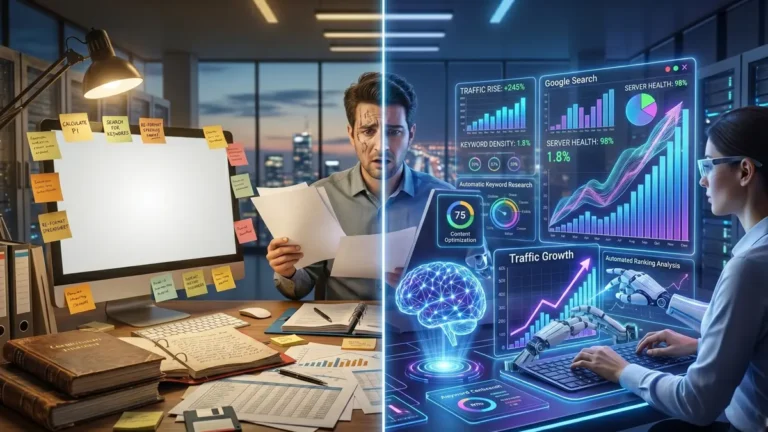
Artificial Intelligence is no longer a futuristic concept in digital marketing. It has already become one of the biggest driving forces behind how brands attract customers, create content, run advertisements, analyze data, and increase conversions. From personalized recommendations to AI-generated content and automated campaigns, the digital marketing industry is going through one of the biggest transformations in its history.
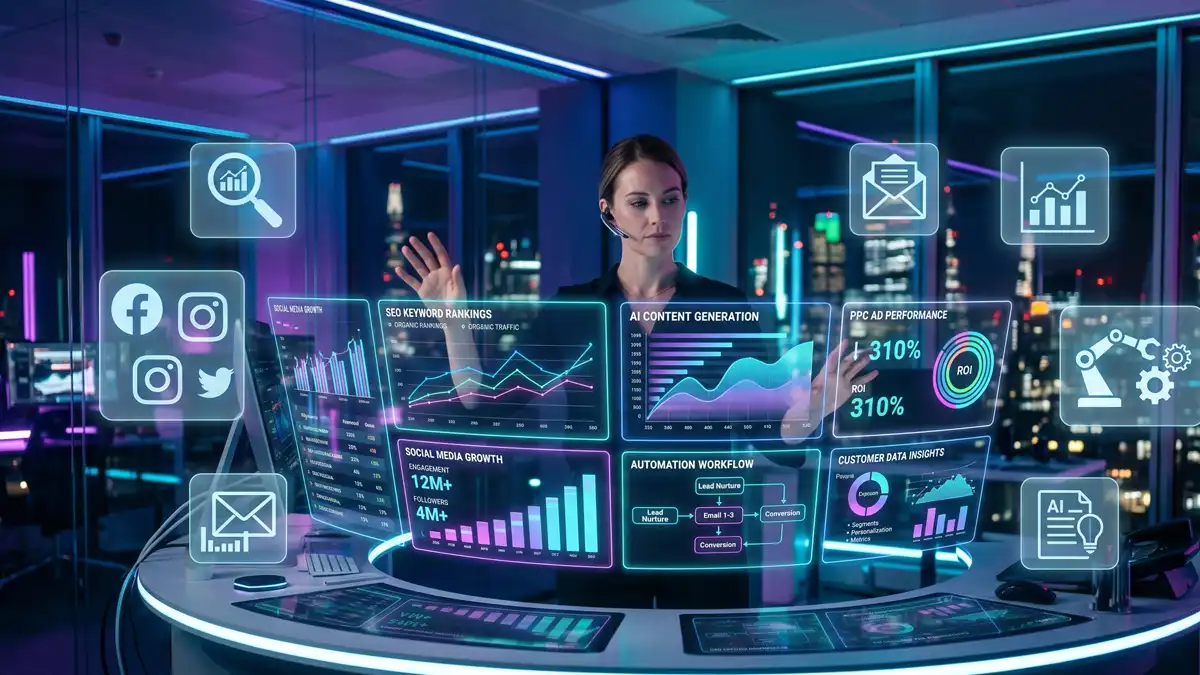
Businesses that once relied entirely on manual strategies are now using AI-powered tools to save time, improve accuracy, and scale faster than ever before. Whether it is SEO, social media, email marketing, paid advertising, or customer support, AI is changing every part of the marketing ecosystem.
In this article, we will explore how AI is changing digital marketing forever, the biggest advantages it brings, the challenges marketers face, and what the future may look like.
The Rise of AI in Digital Marketing
Over the last few years, AI technology has become more accessible to businesses of all sizes. Earlier, only large corporations could afford advanced automation systems and data analysis platforms. Today, even small businesses and solo creators can use AI tools for content creation, analytics, customer engagement, and marketing automation.
The main reason behind this rapid adoption is simple: AI saves time while improving results.
Modern digital marketing generates huge amounts of data every second. Human teams alone cannot process all this information efficiently. AI can analyze customer behavior, identify patterns, predict trends, and automate repetitive tasks within seconds.
This allows marketers to focus more on strategy and creativity instead of spending hours on manual work.
AI-Powered Content Creation
Content marketing has completely changed because of AI.
Earlier, creating blog posts, ad copies, social captions, product descriptions, and email campaigns required significant time and effort. Now AI writing tools can generate high-quality drafts in minutes.
AI tools help marketers with:
- Blog topic generation
- SEO content optimization
- Social media captions
- Email subject lines
- Product descriptions
- Video scripts
- Ad copywriting
- Content repurposing
This does not mean human writers are becoming irrelevant. Instead, AI works as an assistant that speeds up the process. Human creativity, storytelling, and emotional understanding are still essential for creating impactful content.
The smartest marketers today combine AI efficiency with human creativity.
SEO Is Becoming Smarter with AI
Search Engine Optimization has evolved dramatically because of AI technologies.
Search engines themselves are heavily AI-driven now. Google uses machine learning systems to better understand user intent, content quality, and search behavior. This means old SEO tricks no longer work like they once did.
AI is helping marketers improve SEO through:
Keyword Research
AI tools can quickly identify high-volume and low-competition keywords while analyzing search intent more accurately.
Content Optimization
Modern SEO tools provide AI-driven recommendations for headings, readability, internal linking, semantic keywords, and structure optimization.
Predictive SEO
Some AI platforms can even predict trending topics before they become highly competitive.
Voice Search Optimization
With the rise of voice assistants, AI helps marketers optimize content for conversational search queries.
As search engines become smarter, marketers must focus more on quality, relevance, and user experience instead of keyword stuffing.
Personalized Marketing at Scale
One of the biggest advantages of AI is personalization.
Consumers today expect brands to understand their preferences. Generic marketing campaigns are becoming less effective because users want personalized experiences.
AI helps businesses deliver customized content based on:
- Browsing history
- Purchase behavior
- Interests
- Demographics
- Device usage
- Engagement patterns
For example:
- Streaming platforms recommend content based on viewing habits.
- E-commerce stores suggest products users are likely to buy.
- Email campaigns automatically adapt based on customer behavior.
This level of personalization increases engagement, customer satisfaction, and conversion rates.
AI in Social Media Marketing
Social media marketing has become much more data-driven because of AI.
AI tools now help marketers:
- Schedule content automatically
- Generate captions and hashtags
- Analyze audience behavior
- Predict best posting times
- Monitor trends
- Track engagement
- Automate responses
Social listening tools powered by AI can analyze millions of online conversations to understand public sentiment around a brand.
This helps businesses react quickly to trends, customer feedback, and market changes.
Short-form video platforms are also using AI algorithms heavily to determine which content gets maximum visibility. This is why understanding AI-driven recommendations has become essential for social media growth.
AI Is Revolutionizing Paid Advertising
Paid advertising platforms like Google Ads and social media ad networks are increasingly powered by AI.
Today, AI can automatically:
- Optimize bidding strategies
- Target the right audience
- Adjust ad placements
- Improve conversion tracking
- Analyze campaign performance
- Generate ad variations
Smart campaigns use machine learning to continuously improve performance based on user interactions.
This allows businesses to achieve better ROI while reducing manual campaign management.
However, marketers still need strategic oversight. AI can optimize campaigns, but humans are needed to define branding, messaging, goals, and creative direction.
Marketing Automation Is Becoming Essential
Automation is one of the biggest reasons why AI is transforming digital marketing.
Businesses can now automate repetitive tasks such as:
- Email sequences
- Lead nurturing
- Customer segmentation
- Social media posting
- Chat support
- Analytics reporting
- CRM updates
This improves efficiency while reducing operational costs.
AI-powered chatbots, for example, can handle customer queries 24/7 without human intervention. This improves response times and customer experience significantly.
Automation also allows businesses to scale marketing efforts without massively increasing team size.
Data Analytics and Predictive Insights
Digital marketing generates enormous amounts of data. AI helps convert this data into actionable insights.
AI-powered analytics tools can identify:
- Customer behavior trends
- Conversion bottlenecks
- Campaign weaknesses
- Audience preferences
- Future purchasing patterns
Predictive analytics is especially powerful because it helps businesses make smarter decisions before problems occur.
Instead of reacting after a campaign fails, marketers can use AI insights to optimize strategies proactively.
This creates a major competitive advantage.
The Growth of AI Chatbots and Virtual Assistants
Customer communication has changed significantly with AI chatbots.
Modern chatbots can answer questions, guide users, recommend products, and even complete sales processes.
Benefits include:
- Instant customer support
- Reduced workload for support teams
- Higher engagement
- Faster response times
- Better user experience
AI assistants are also improving lead generation by interacting with visitors in real time.
As conversational AI becomes more advanced, customer interactions will become even more personalized and human-like.
Video Marketing and AI
Video marketing is another area being transformed by AI.
AI tools can now help with:
- Video editing
- Automatic subtitles
- Voice generation
- Script writing
- Thumbnail creation
- Video recommendations
- Audience analysis
This makes video production faster and more accessible, especially for small creators and businesses.
AI-generated videos are also becoming increasingly realistic, opening new possibilities for content creation and advertising.
Challenges of AI in Digital Marketing
Although AI offers massive benefits, it also comes with challenges.
Overdependence on Automation
Too much automation can make content feel robotic and less authentic.
Privacy Concerns
AI relies heavily on user data, which raises concerns about data privacy and ethical marketing practices.
Content Quality Issues
AI-generated content still requires human editing to maintain originality, accuracy, and emotional connection.
Job Transformation
Some repetitive marketing roles are changing because of automation. However, new opportunities are also being created in AI management, strategy, and creative oversight.
Algorithm Dependency
Many businesses become overly dependent on AI-driven platforms and algorithms they do not fully control.
Balancing automation with human creativity remains essential.
The Future of AI in Digital Marketing
The future of digital marketing will be deeply connected with AI.
In the coming years, we can expect:
- Hyper-personalized customer experiences
- Smarter search engines
- More advanced AI-generated content
- Improved voice and visual search
- Real-time predictive marketing
- Better automation systems
- AI-powered influencer marketing
- Advanced customer journey tracking
Businesses that adapt early will likely gain a major competitive advantage.
However, authenticity will become even more important. As AI-generated content increases online, audiences may value genuine human connection more than ever before.
The future will not belong to businesses that use only AI. It will belong to businesses that combine AI efficiency with human creativity and trust.
Conclusion
AI is not just changing digital marketing temporarily. It is reshaping the entire industry permanently.
From SEO and content creation to paid advertising and customer engagement, AI is making marketing smarter, faster, and more personalized. Businesses can now automate complex tasks, analyze data more efficiently, and deliver better customer experiences at scale.
At the same time, human creativity, emotional storytelling, and strategic thinking still remain irreplaceable.
The brands that succeed in the future will be the ones that learn how to work alongside AI instead of fearing it.
Digital marketing is evolving rapidly, and AI is leading that transformation forever..
Also: